

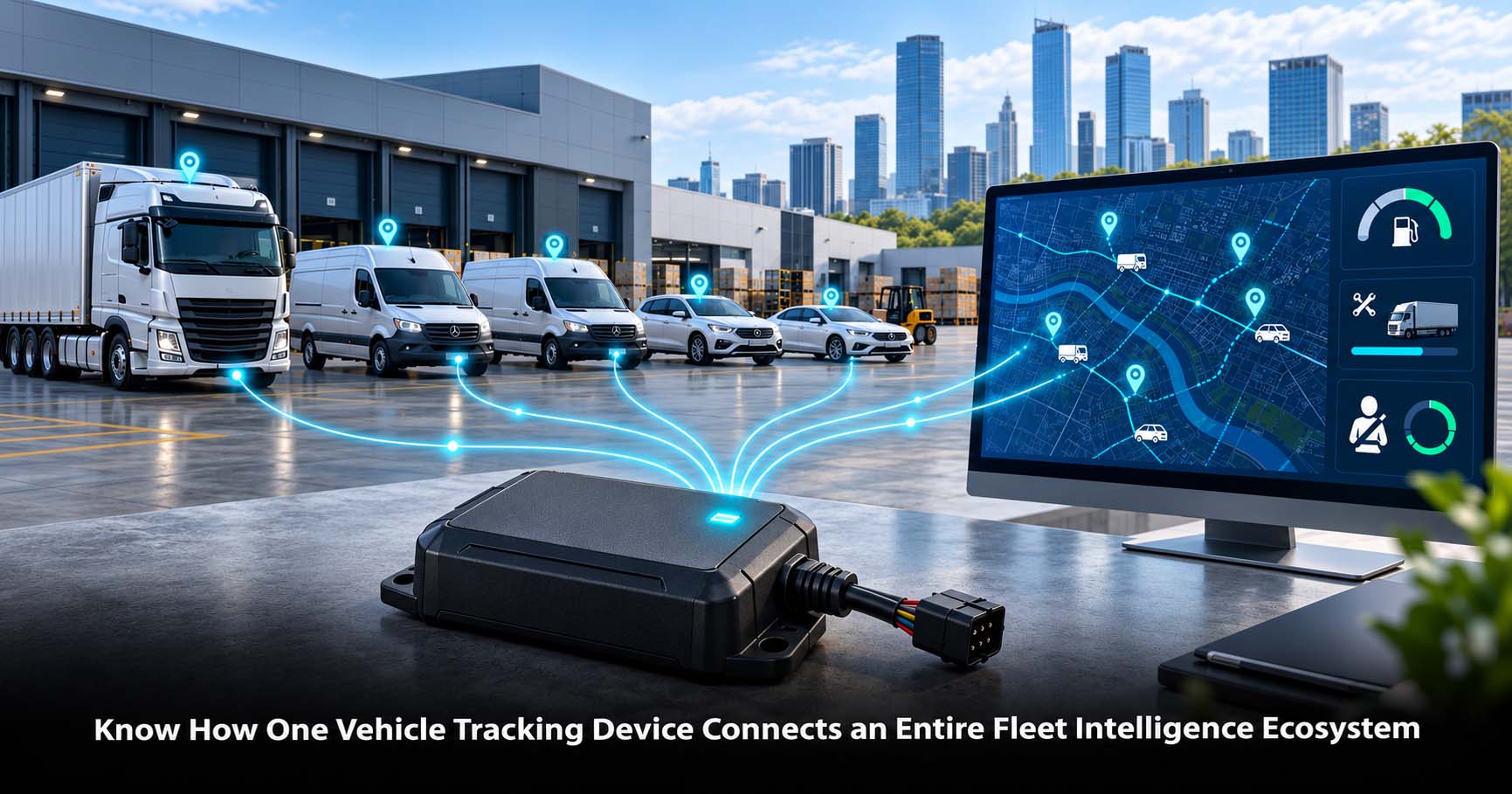

Your trucks move all day. Your data should move with them. Yet many owners still treat a business vehicle tracking device like a fancy dot on a map. They see location and nothing else. Meanwhile, fuel drains, drivers speed, and cameras record events that nobody links to a route. Every day, that difference costs a fortune. It also hides risk. A late delivery, a fuel dip, and a harsh braking alert look like three separate problems. In truth, they often share one story.
This guide shows how one small unit inside your vehicle can connect fleet management software, sensors, cameras, and driver monitoring systems into one fleet intelligence ecosystem. You will learn how the connection works, what each data stream adds, and what to check before you buy.
Keep reading, and you will see why interoperability now defines smart GPS fleet tracking in 2026. You might even look at your dashboard with fresh suspicion.
Why One Device Now Sits at the Center of Fleet Operations?
Fleet owners no longer buy tracking for location alone. They buy it for control. The global fleet management market is expected to grow from USD 43.56 billion in 2026 to USD 88.49 billion by 2032, at a CAGR of 12.5%. That growth tells a clear story. Operators want more than a pin on a screen. They want real time visibility, operational efficiency, and cost control from every vehicle.
Adoption also shows a split. Roughly 67% of commercial fleets use some form of GPS fleet tracking, and large fleets with 100 or more vehicles pass 80%, while small fleets under 10 vehicles sit near 40 to 50%. So a large share of small operators still drive blind. That is risky in a year when fuel, insurance, and delivery promises all keep tightening.
Is a business vehicle tracking device only for large fleets? No. A single truck with a tracker gains route history, idle alerts, and geofence alarms. A ten truck fleet gains far more once it links that tracker to other onboard technology. The device is the doorway. Everything else walks through it.
The market also shifts in this direction. Commercial telematics is moving from conventional vehicle tracking toward integrated fleet intelligence, with better visibility across vehicles, drivers, fuel usage, safety events, and asset utilization. One device, many voices.
How a Business Vehicle Tracking Device Becomes a Connectivity Layer?
Think of the tracker as a translator. Sensors speak in voltage, pulses, and video frames. Software speaks in dashboards and reports. The tracker sits between them and converts everything into one language.
The Hardware Gateway Role
A modern tracker carries a GPS module, a cellular modem, a processor, and several input ports. Those ports accept wired signals from fuel probes, door switches, panic buttons, and temperature units. Many units also read vehicle bus data through standard diagnostic interfaces. That gives you engine hours, speed, and fault codes without adding extra boxes. Hardware in this space includes GPS tracking devices, telematics control units, dashcams, and IoT sensors for specialized monitoring. The tracker ties them together.
The Data Journey to the Cloud
Each device reading gets a timestamp and a location. The tracker then sends packets to a cloud platform over a mobile network. The telematics platform sorts, stores, and displays them. Because every reading shares the same time and place, the platform can match a fuel drop with a stop, or a hard brake with a video clip.
India also pushed this design forward. The AIS 140 vehicle tracking mandate, implemented in April 2018, further promoted telematics integration. Compliance created a common baseline, and smart owners built on top of it.
Fuel Level Sensors Turn Guesswork into Evidence
Fuel is often the biggest running cost, and it is the easiest to lose quietly. A dashboard needle tells the driver something. It tells the owner nothing. A fuel level sensor connected to the tracker changes that.
The sensor measures the tank level all day. The tracker logs each reading with time and place. Now you can see fill events, sudden drops, and slow leaks. You can also compare consumption across similar routes. If one truck burns far more than its twin on the same lane, you have a lead worth chasing. It might be driving style. It might be a worn injector. It might be a siphon at a quiet roadside stop.
Sensor choice matters, so keep these points in mind.
• Capacitive probes suit many standard tanks and give steady readings.
• Ultrasonic sensors suit tanks where a probe cannot fit.
• Calibration for each tank shape keeps readings honest.
• Alert thresholds should account for road slope and fuel sloshing.
Fuel data alone helps. Fuel data joined with route history, idling time, and geofence events tells you why the litres vanished. That is the ecosystem effect. Each stream explains the others, and false alarms drop.
Cameras, NVR, and Driver Monitoring Add the Missing Context
Numbers show what happened. Video shows how. A network video recorder connected to the tracker stores footage from cabin and road cameras. The tracker tags each clip with speed, location, and event type. So a harsh braking alert stops being a mystery. You watch the five seconds around it and understand the cause.
Is a driver monitoring system worth adding to a tracking setup? For most commercial fleets, yes. A DMS watches the driver’s face and behavior. It can flag drowsiness, phone use, and distraction. An ADAS unit watches the road ahead. It can flag close following and lane drift. Both feed alerts through the same tracker, so your safety team sees one timeline instead of three tools.
This approach also protects honest drivers. Video clears them in disputes about accidents and delivery claims. It gives coaching a factual base too. A manager can show a clip and discuss one habit calmly, rather than argue from a vague report. Rear view cameras add blind spot cover during reversing, which remains a common source of yard damage.
Privacy needs care. Tell drivers what you record, why you record it, and how long you keep it. Trust builds a safer fleet than surveillance alone.
Turning Combined Data Streams into Fleet Intelligence
A pile of data is not intelligence. Intelligence appears when streams meet. The table below shows how single sources compare with combined ones.
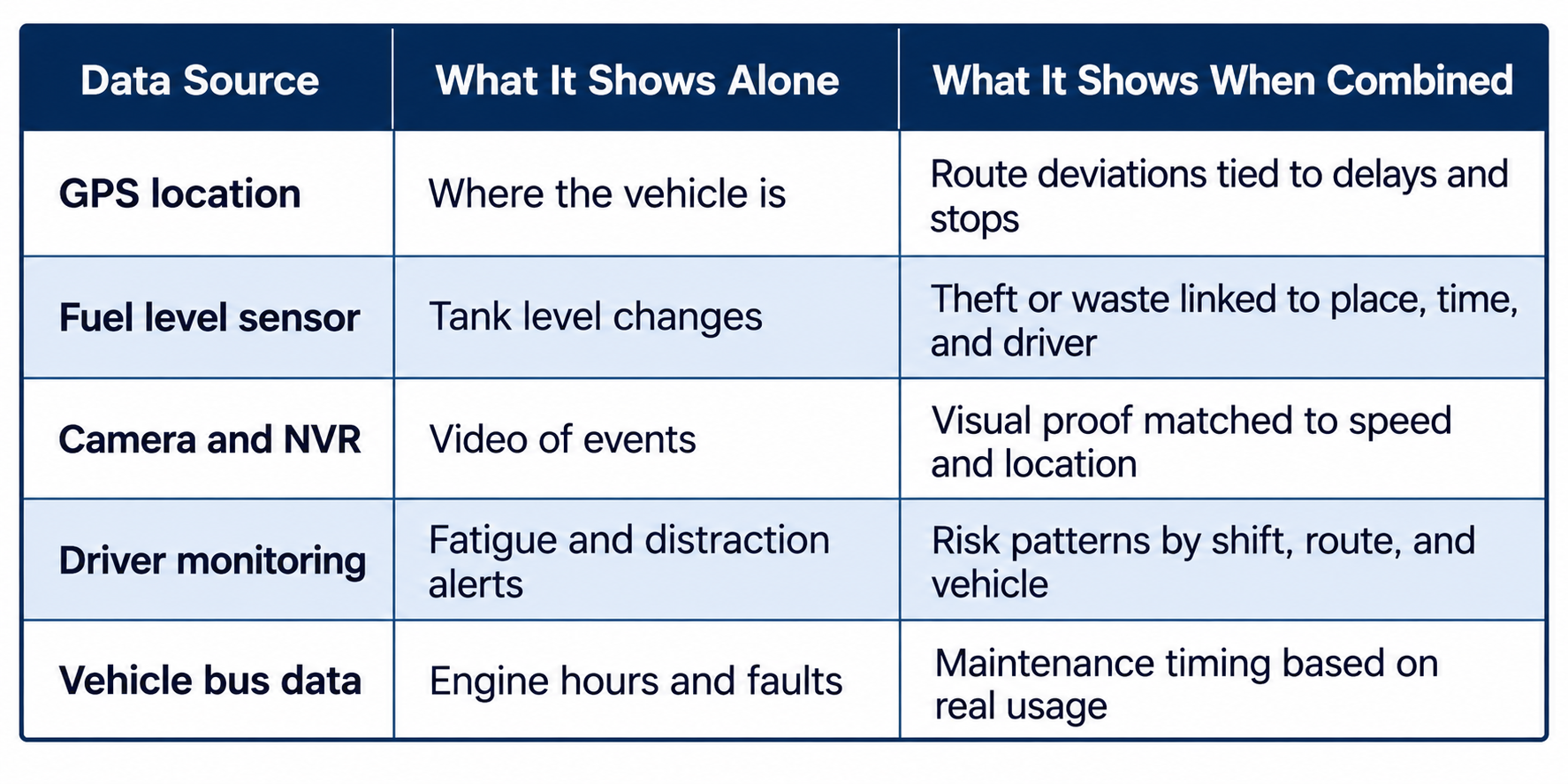
Consider a simple example. A truck stops for forty minutes at an unplanned spot. The fuel sensor shows a sharp drop. A person is seen close to the tank on camera. Three separate tools would give you three vague notes. One connected ecosystem gives you a case file.
The same logic helps maintenance. Engine hours and fault codes tell you when a service is due. Idling data tells you which vehicles wear faster. Over months, your predictive maintenance plan improves, and breakdowns drop. Your fleet analytics also feed better decisions on route planning, driver training, and vehicle replacement. Each data stream is useful. Together, they are decisive.
What to Check Before You Buy a Business Vehicle Tracking Device?
Not every tracker connects equally well. A cheap unit with two ports and closed software will box you in. Use this checklist before you sign.
- Input and output ports should cover fuel probes, cameras, and switches.
- Open integration through APIs lets you link your billing or dispatch software.
- Regulatory approval should match your vehicle class and state rules.
- Data security should include encrypted transfer and audited processes.
- Retrofit support matters because many fleets prefer aftermarket installations for their flexibility and cost effectiveness, and demand for retrofit telematics keeps rising.
- Local support should be quick, because a dead tracker means blind trucks.
How much does a business vehicle tracking device cost? Prices vary by device class, sensors, and plan. A basic wired unit costs far less than a full setup with cameras and fuel probes. Ask for a quote that separates hardware, installation, and monthly platform fees. Then compare total cost over three years, not just the sticker price.
eTrans shows what a joined ecosystem looks like in practice. Its range includes wired basic and advanced GPS devices, AIS approved units, network video recorders with optional ADAS and DMS, rear view cameras, and fuel level sensors. That range lets one tracker anchor the whole stack.
In a Nutshell
A tracker is no longer a lone gadget. It is a gateway. A business vehicle tracking device collects location, reads onboard signals, and passes everything to one platform. Fuel sensors add proof about consumption. Cameras and NVR units add visual context. Driver monitoring adds early warnings about fatigue and distraction. Each source improves the others.
The market backs this shift. Fleet management spending keeps rising, adoption keeps widening, and buyers now expect connected platforms instead of isolated tools. Small fleets that still drive without tracking face the biggest gap, yet they also stand to gain the most.
Before you buy, check ports, integration options, approvals, security, and support. Pick a device that can grow with your fleet. Start with location if you must. Add fuel monitoring next. Add cameras and driver monitoring after that. Every layer you add makes your fleet smarter, safer, and cheaper to run. The device is small. The intelligence it unlocks is not.
Build Your Fleet Intelligence Ecosystem with eTrans Solutions Today
Ready to stop guessing and start knowing? eTrans Solutions has spent over 25 years helping Indian businesses see, secure, and streamline their fleets. Headquartered in Kolkata, the company serves more than 600 customers across transport, cold chain, construction, mining, FMCG, and many other sectors. It holds ISO 9001 and ISO 27001 certifications, so your quality and data security stand on proven ground. Its team of over 450 professionals backs you with round the clock support.
Whether you run five trucks or five hundred, eTrans offers a business vehicle tracking device to match your needs. Choose wired basic or advanced GPS trackers, AIS approved units, network video recorders with optional ADAS and DMS, rear view cameras, and fuel level sensors. Then link everything to one platform and watch your fleet intelligence grow.
Take the first step today. Your vehicles already carry stories. Let eTrans help you read them.
Frequently Asked Questions
1. What is a business vehicle tracking device?
It is a GPS based unit installed in a commercial vehicle. It sends location, speed, and sensor data to a cloud platform, so owners can monitor routes, fuel use, and driver behavior in real time.
2. Can one tracking device connect to cameras and fuel sensors?
Yes. Most advanced trackers include input ports and data links for fuel probes, cameras, and driver monitoring units. The tracker tags each reading with time and location, then sends everything to one platform.
3. Does GPS tracking help reduce fuel theft?
It helps a lot when paired with a fuel level sensor. The sensor shows sudden drops, while GPS shows the exact place and time, giving owners clear evidence to investigate.
4. What is AIS 140 and why does it matter for fleets?
AIS 140 is an Indian standard for vehicle tracking devices in public transport and commercial vehicles. It sets device and reporting requirements, so compliant trackers give fleets a legal and technical baseline.
5. How do I choose the right business vehicle tracking device?
Check port count, integration options, regulatory approval, data security, and local support. Compare three year total cost, including hardware, installation, and platform fees, before you decide.