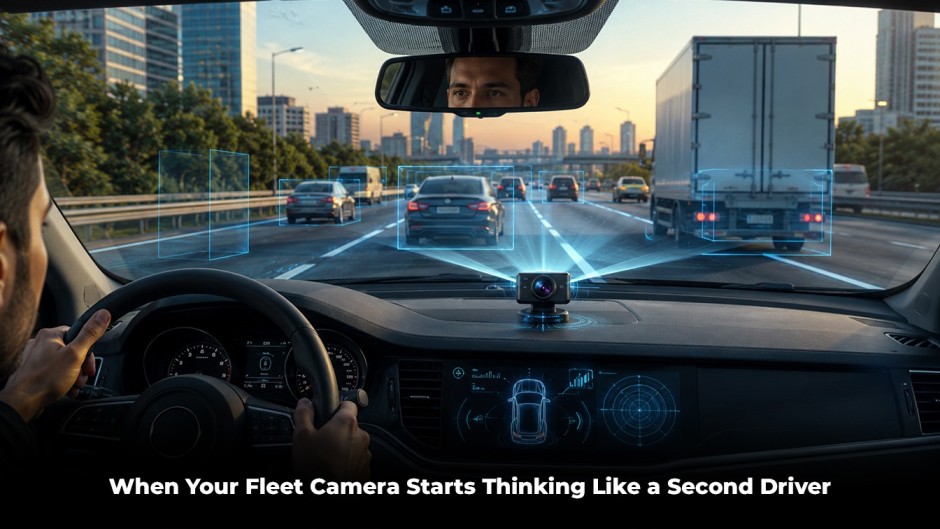
Your driver takes a sharp turn a little too fast, brakes hard near a school zone, or drifts into another lane while reaching for a coffee cup. A few years ago, that moment would have vanished into thin air unless something went wrong. Today, your
video telematics system, whether it is a DASHCAM, a video recorder, or a full MDVR setup, catches it, tags it, timestamps it, and quietly flags it for review.
Fleet owners across India lose lakhs every year to preventable accidents, fuel wastage, and insurance disputes that could have been avoided with better visibility. Still treating your onboard camera as a passive box that just records footage means you are sitting on an underused asset.
This article walks you through how modern video recording technology has evolved into something far smarter, almost like a co-pilot watching every mile with you. Keep reading, because the difference between a basic camera setup and an intelligent one could save your fleet from its next costly mistake.
What Exactly Is Video Telematics in a Fleet Context?
Video telematics covers the full family of onboard recording devices, including DASHCAMs, standard video recorders, and MDVRs (Mobile Digital Video Recorders). This section breaks down how these devices work together and why the differences between them matter less than people assume.
How Video Recording Devices Connect to the Rest of the Vehicle
Most video recording systems today, from basic DASHCAMs to advanced MDVRs, work with IP-based cameras, pulling in footage from several angles at once, including the road ahead, the cabin, and the rear view. In a fleet setting, this device does not sit alone. It connects to onboard sensors, GPS modules, and telematics units that constantly feed it data. Fleet managers often ask, “What is the real difference between a DASHCAM and an MDVR?” And size, not core capability, is the true response. A DASHCAM already provides most of the intelligent features fleets rely on today. An MDVR simply extends that capability further, supporting a higher number of connected cameras, larger onboard storage, and more robust sensor integrations for demanding, multi-camera fleet operations.
Think of it as the eyes of the vehicle, except these eyes never blink and never forget. Every frame gets stored locally and, in most modern systems, synced to a cloud dashboard almost instantly. Fleet managers get access to live streaming, historical playback, and event-triggered clips without physically touching the vehicle. Video surveillance in commercial fleets has moved far beyond simple theft deterrence. It now plays a central role in driver behaviour analysis, route compliance, and incident documentation. It is worth noting that sourcing these IP-based cameras has become a live procurement concern for Indian fleets, since current government regulations have introduced restrictions on importing IP cameras from China, prompting many operators to reassess supplier options and lead times.
How AI Video Analytics Turned Passive Footage into Active Insight
AI has quietly rewritten what a fleet camera is capable of doing, and this capability now runs across DASHCAMs and larger MDVR setups alike. This section explains the technology running underneath the footage and the kind of results fleets are actually seeing from it.
The Algorithms Working Behind Every Frame
AI-powered video recording systems now run computer vision algorithms directly on the edge device or through cloud processing. These algorithms scan footage in real time for patterns like harsh braking, sudden lane departure, tailgating, and driver fatigue signs such as prolonged eye closure or yawning. Many fleet operators want to know if AI can really detect risky driving before an accident happens, and the data suggests it can. According to a 2026 commercial fleet safety report published by a global telematics research group, fleets using AI-enabled video recording systems saw a reduction in preventable collisions by nearly 34 percent within the first year of deployment. This improvement applies broadly, whether the fleet runs entry-level DASHCAMs or fuller MDVR configurations with multiple cameras, since the underlying AI analytics engine does the heavy lifting regardless of hardware tier.
From Detection to Real-Time Driver Alerts
Driver monitoring systems built into modern video recorders use facial recognition and behavioural pattern detection to flag distracted driving moments like phone usage or eating while driving. The system does not just record the event. It scores it, categorizes it, and often sends an instant alert to the fleet manager’s dashboard. Some advanced units even trigger an audible in-cab warning the moment risky behaviour is detected, giving the driver a chance to self-correct before the situation escalates. This is the second driver effect. The camera is not just watching. It is actively participating in keeping the vehicle safe.
GPS Correlation and Contextual Event Identification
Footage alone rarely tells the full story. This section looks at why pairing video with location data changes how fleets actually interpret and act on what the camera records.
Why Location Data Gives Footage Its Real Meaning
A video clip showing hard braking means very little without knowing the vehicle’s speed, location, road gradient, and traffic conditions at that exact second. This is where GPS tracking integration becomes the missing puzzle piece. Modern fleet management systems stitch together video timestamps with geolocation data, vehicle telemetry, and route history. When a harsh braking event triggers, the system does not just save a ten-second clip. It pulls the exact coordinates, the speed at impact, the road type, and even weather conditions if the platform supports environmental data feeds. Fleet managers frequently raise the question, “Why does GPS matter so much when you already have video footage?”, and It all boils down to context. Coordinates and speed data turn a random clip into evidence that actually explains itself.
Faster Claims and Fewer Disputes
This contextual layering changes how disputes get resolved. Instead of a fleet manager guessing why a driver braked hard near a particular junction, the dashboard shows the full picture instantly, whether it was a pedestrian crossing, an aggressive merge, or simple distraction. Insurance claims processing has also benefited enormously from this correlation.
A 2026 industry analysis from a commercial vehicle insurance consortium noted that claims supported by synchronized video and telematics data were settled 28 percent faster than claims relying on driver statements alone. Faster settlements mean less downtime, less paperwork, and significantly lower administrative overhead for fleet operators managing dozens or hundreds of vehicles.
Driver Behaviour Recognition: Teaching the Camera to Understand People, Not Just Roads
Cameras are no longer just watching single moments in isolation. This section covers how video telematics platforms build a fuller picture of each driver over time and what that means for coaching and cost control.
Building Behaviour Profiles Over Time
Driver behaviour recognition goes beyond detecting a single risky moment. It builds a behavioural profile over time, tracking patterns like frequent speeding, inconsistent braking habits, or a tendency to skip mandatory rest breaks on long hauls. Fleet managers now receive weekly or monthly behaviour scorecards generated automatically from video recorder data. These scorecards rank drivers based on safety metrics, fuel
efficiency indicators, and compliance with route guidelines. Rather than relying on manual spot checks or complaints, managers get an objective, data-backed view of who needs coaching and who deserves recognition.
The Financial Case for Behaviour-Based Coaching
This kind of predictive risk scoring has real financial weight behind it. A 2026 logistics safety benchmarking study found that fleets implementing behaviour-based coaching programs, informed directly by AI video analytics, reduced their overall accident-related costs by up to 22 percent within eighteen months. That includes repair costs, insurance premium hikes, and lost productivity from vehicle downtime. There is also a coaching angle that often gets overlooked. When drivers know their behaviour is being tracked constructively rather than punitively, many actually improve their habits voluntarily. It becomes less about surveillance and more about shared accountability between the driver and the fleet operator, both working toward fewer incidents and smoother operations.
Incident Detection and Automated Alerts: Cutting Response Time Dramatically
Speed matters when something goes wrong on the road. This section explains how modern video recording systems shrink the gap between an incident happening and a fleet manager actually knowing about it.
From Impact to Instant Alert
Modern incident detection systems built into video telematics platforms respond within seconds of an event. Collision detection sensors combined with G-force impact monitoring trigger instant alerts the moment a significant jolt or sudden stop is recorded. These alerts do not just say something happened. They package the event with video evidence, GPS location, speed data, and a timestamp, all sent directly to a centralized dashboard or mobile app. This naturally raises the question, how fast can a fleet manager know something has gone wrong, and with these systems the answer is often within seconds rather than hours. Fleet managers can then decide within minutes whether emergency assistance is needed, whether the driver requires immediate contact, or whether the event was a false alarm triggered by a pothole.
Keeping Data Safe Even in Low-Signal Areas
Automated incident reporting has proven especially valuable for long-haul operations where vehicles travel through remote stretches with limited connectivity. Many modern video recorders, including MDVRs designed for larger camera arrays, store event data locally and sync automatically once network coverage resumes, ensuring no critical footage gets lost even in low-signal zones. A 2026 fleet operations survey covering mid-sized logistics companies found that businesses using automated incident alerting reduced their average emergency response time by nearly 40 percent compared to fleets relying solely on driver phone calls. That kind of speed can genuinely be the difference between a minor mishap and a major liability.
Data Storage, Cloud Sync, and Real-Time Monitoring
Intelligence means nothing without solid infrastructure behind it. This section covers how footage gets stored, synced, and protected once it leaves the camera lens, and where DASHCAMs and MDVRs start to differ in practice.
Storage, Bandwidth, and Retention in Practice
None of this intelligence matters if the underlying data storage infrastructure cannot keep up. Here is where DASHCAMs and MDVRs genuinely diverge. A standard DASHCAM typically supports fewer camera channels with moderate onboard storage, while an MDVR is built for fleets needing more camera integrations, considerably larger storage capacity, and additional sensor inputs for complex, multi-vehicle operations. Both device types combine onboard solid-state storage with cloud backup capabilities, ensuring footage survives even if the physical device gets damaged or stolen.
Real-time monitoring dashboards allow fleet managers to view live feeds from any vehicle in their fleet without waiting for the vehicle to return to base. Newer systems use adaptive video compression, adjusting quality based on available network strength, so footage streams smoothly even over standard mobile data connections. Storage retention policies typically allow footage to be archived for 30 to 90 days, depending on the plan, giving fleet operators enough buffer to review incidents, respond to disputes, or support insurance claims without racing against a deletion clock.
Security and Access Control Around Sensitive Footage
Security has not been ignored either. Encrypted data transmission and role-based access control ensure that sensitive footage stays protected from unauthorized viewing, an increasingly important consideration as data privacy regulations tighten across the logistics and transportation sector. Fleet operators handling high-value cargo or passenger transport benefit particularly from this layer, since access logs make it easy to track exactly who viewed which clip and when.
Why Standalone Cameras No Longer Cut It?
Isolated hardware limits what a fleet can actually learn from its footage, regardless of whether it is a DASHCAM or an MDVR. This section explains why integration, not just camera count or storage size, is what separates a genuinely useful system from a basic one.
What Integration Actually Looks Like in Practice
A camera that only records without connecting to broader fleet intelligence is essentially a black box collecting dust. Integrated video telematics systems paired with GPS tracking and fleet management platforms unlock value that standalone units simply cannot match. eTrans Solutions has built its approach around this exact philosophy, integrating video recording technology, whether DASHCAM or MDVR, directly with its vehicle tracking ecosystem rather than offering cameras as a separate, disconnected add-on.
This means fleet operators get a unified view where video footage, location data, speed logs, and driver behavior scores all live within a single dashboard instead of scattered across multiple disconnected tools. A fleet manager investigating a customer complaint about a delayed delivery can pull up the exact route taken, cross-reference it with video footage, and confirm whether the delay came from traffic congestion, a mechanical stop, or a routing error, all within minutes rather than hours of manual cross-checking.
Conclusion
Video telematics, whether delivered through a DASHCAM, a standard video recorder, or a full MDVR setup, has quietly transformed from a passive storage box into something closer to a second driver, one that watches, learns, and communicates constantly with the rest of your fleet’s technology stack.
From AI-driven driver behaviour recognition to GPS-correlated incident detection, today’s video recording systems do far more than capture footage. They actively reduce accidents, speed up insurance claims, and give fleet managers the kind of real-time visibility that was unimaginable just a few years ago.
Businesses that treat these systems as isolated surveillance tools are leaving significant value on the table. Those that integrate video intelligence with GPS tracking and telematics gain a genuine operational advantage, safer drivers, faster incident response, and measurably lower costs over time.
Ready to Turn Your Fleet Camera into a True Second Driver? Contact eTrans Solutions today!
Your fleet does not have to keep running on disconnected cameras and guesswork. eTrans Solutions brings video telematics technology, GPS tracking, and fleet management together into one intelligent system built for real operational results. Reduce accidents, speed up claims, and gain complete visibility over every vehicle on the road. Reach out to eTrans Solutions today and see how integrated fleet intelligence can protect your drivers, your cargo, and your bottom line.
Frequently Asked Questions
1. What is the main advantage of an AI-powered DASHCAM or MDVR over a basic camera setup?
AI-powered systems analyze footage in real time, detecting risky behaviour and incidents instantly, while a basic camera only stores footage passively for later review.
2. What is the actual difference between a DASHCAM and an MDVR?
Both share the same core intelligent features. An MDVR supports more integrated cameras, larger storage, and additional sensor integrations for larger, more complex fleets.
3. How does GPS integration improve fleet camera footage?
GPS integration adds location, speed, and route context to video clips, helping fleet managers understand exactly what happened during an incident, not just that it occurred.
4. Can video telematics systems help lower insurance costs?
Yes, synchronized video and telematics data speeds up claims processing and provides clear evidence, which often leads to faster settlements and improved insurance terms over time.
5. Does driver behaviour monitoring feel intrusive to drivers?
When implemented as a coaching tool rather than pure surveillance, most drivers respond positively, often improving habits once they understand the data supports their safety.