


India moves on wheels. Every day, hundreds of thousands of commercial trucks, delivery vans, buses, and cargo vehicles crisscross the country’s highways, state roads, and city lanes. Yet, a massive chunk of Indian fleet operators still manage this movement through outdated tracking systems, delayed reports, and reactive decision-making. A vehicle breaks down on NH-48. Another sits idle for an hour burning diesel in a Pune industrial zone. A third deviates from its approved route somewhere between Kolkata and Bhubaneswar, and the control room finds out only when the driver calls.
This operational blindness costs Indian businesses crores every year. Fuel wastage, delayed deliveries, compliance penalties, and unplanned maintenance drain margins across logistics, transportation, and e-commerce sectors. A cloud-native real-time vehicle tracking system directly addresses every one of these pain points. It gives you centralized visibility, live telematics data, automated alerts, and intelligent analytics across your entire distributed fleet.
Keep reading to understand exactly how this technology works and why Indian enterprises cannot afford to operate without it.
Why Cloud-Native Real-Time Vehicle Tracking Systems Are Redefining Fleet Management?
The India Vehicle Tracking Market was valued at USD 2.3 billion in 2024 and is expected to reach USD 5.42 billion by 2030, growing at a CAGR of 15.20%. That number is not just a market forecast. It reflects how urgently Indian fleet operators are moving away from fragmented legacy systems toward intelligent, connected platforms.
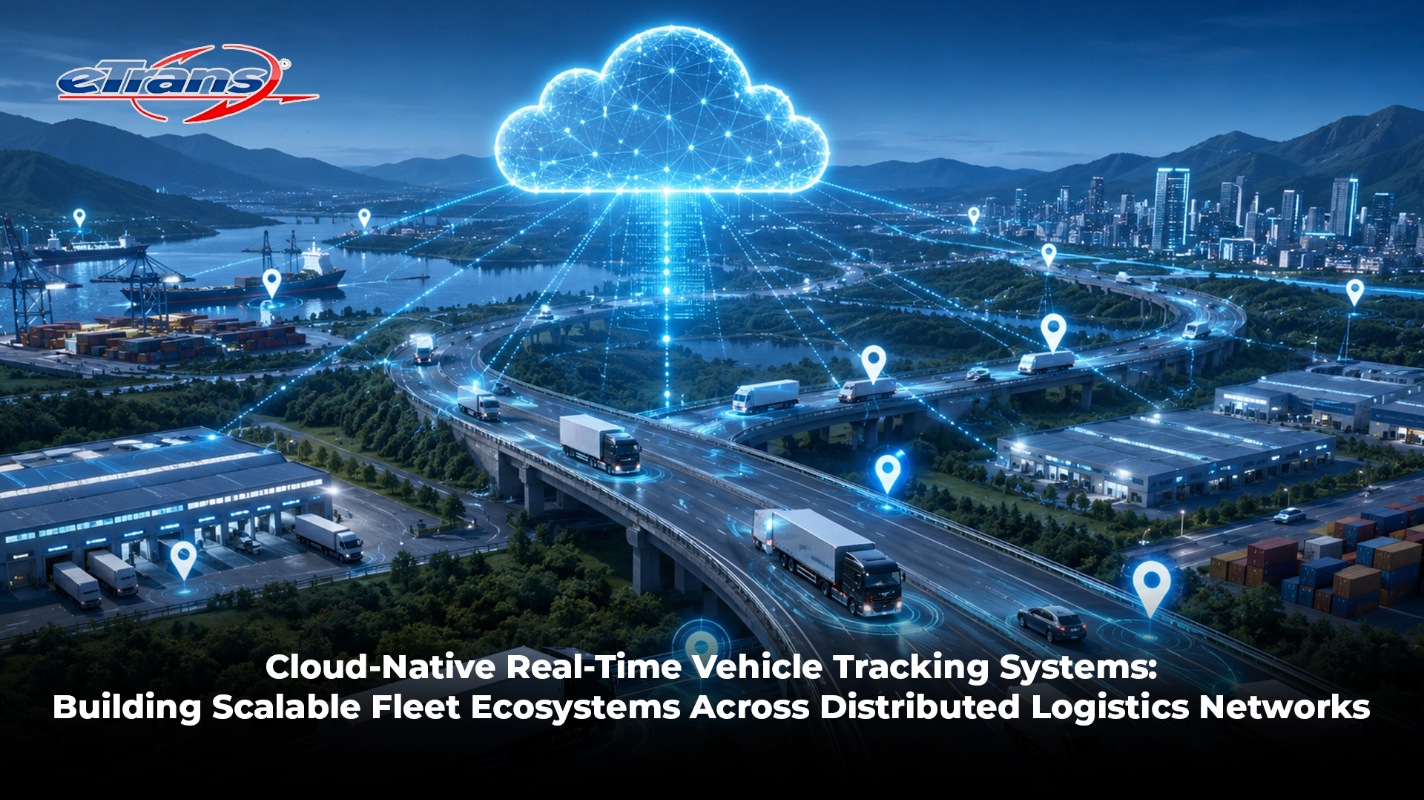
Modern real-time vehicle tracking systems in India are no longer simple GPS dots on a screen. They function as full-scale operational intelligence platforms connecting vehicles, drivers, IoT sensors, dispatch centers, and compliance systems through unified cloud infrastructure. A logistics company running 500 trucks across Maharashtra, Telangana, and West Bengal cannot manage operations through localized servers and manual reporting. Operational continuity demands centralized, always-accessible systems that process live telematics feeds without interruption.
India’s logistics market is expected to reach nearly USD 380 billion by 2030, according to NITI Aayog estimates, making efficiency no longer optional but essential. Technology-driven companies delivering cloud-enabled telematics and fleet intelligence solutions are at the forefront of this national transformation, helping Indian transportation businesses shift decisively from reactive to proactive fleet management.
The Evolution from Conventional GPS Tracking to Cloud- Native Fleet Ecosystems
Traditional vehicle tracking in India meant SIM-card-based GPS dongles feeding location data into on-premise servers. Fleet managers received location pings every 30 seconds, with zero context about fuel levels, driver behavior, or cargo conditions. Scalability was nonexistent. Adding 100 more vehicles meant buying more servers, hiring more IT staff, and tolerating more downtime.
Cloud-native architecture has flipped this model entirely. Centralized cloud environments support continuous software updates, automatic scaling, and real-time synchronization across fleets spread from Jammu to Kanyakumari. Hundreds of vehicles operating in different states push live data simultaneously into a single intelligent dashboard without any infrastructure lag.
Cloud and SaaS deployment captured 69.10% of India’s fleet management software market share in 2025 and is expanding at a 13.55% CAGR through 2031. This migration toward scalable telematics ecosystems reflects a structural industry shift. Companies that previously relied on fragmented server-based tracking are now rebuilding their entire fleet intelligence infrastructure around cloud-native platforms designed specifically for high-volume Indian logistics operations.
Understanding Cloud-Native Architecture in Real-Time Vehicle Tracking Systems
The technical foundation of a cloud-native real-time vehicle tracking system rests on three interconnected pillars: distributed cloud infrastructure, containerized applications, and microservices-based design. Each component serves a specific function in making Indian fleet management scalable and resilient.
Containerized applications allow individual tracking functions, such as geofencing, fuel monitoring, and route analytics, to operate independently. If the fuel analytics module experiences heavy data load during peak operations, the system scales only that component without affecting location tracking or driver behavior modules. Microservices communicate through API-driven connectivity, ensuring seamless data flow between vehicles, sensors, control centers, and third- party systems like FASTag and e-way bill platforms.
Integration with FASTag and e-way bill systems is further enhancing compliance tracking and operational visibility, positioning telematics as a key enabler of India’s connected mobility ecosystem. High availability is maintained through redundant cloud nodes that keep the system operational even if one data center goes offline, ensuring Indian logistics operators never lose visibility over their moving assets regardless of geography or connectivity conditions.
Real-Time Data Synchronization Across Distributed Logistics Networks
This is where cloud-native systems deliver their most immediate value for Indian fleet operators. Every vehicle in a distributed fleet continuously transmits live GPS coordinates, fuel consumption data, route progress, driver behaviour scores, engine health metrics, and cargo status into a centralized cloud platform. This happens simultaneously, across hundreds of vehicles, covering the length and breadth of India, in real time.
India’s express logistics segment was valued at around USD 9 billion in FY25 and is expected to double to USD 18 to 22 billion by FY30, driven by last-mile deliveries and faster e-commerce fulfillment needs. This growth cascades directly into demand for real-time tracking, route optimization, fuel management, and vehicle diagnostics.
Real-time synchronization transforms how Indian logistics operators handle shipment visibility. A dispatch team in Mumbai can monitor a vehicle stuck in Nagpur traffic and instantly reroute it without waiting for the driver to call. A customer service team in Bengaluru can provide live delivery ETAs based on actual vehicle coordinates rather than estimated schedules. The entire supply chain becomes faster, smarter, and significantly more reliable when live data flows
seamlessly from vehicles across India into centralized dashboards that decision-makers can act on immediately.
Scalability in Modern Fleet Ecosystems Through Cloud Infrastructure
Scalability is the defining competitive advantage of cloud-native fleet platforms for growing Indian enterprises. Consider an Indian third-party logistics company that expands from 200 vehicles to 2,000 within two years, a scenario playing out across India’s booming e-commerce sector. A legacy on-premise system would require significant hardware investment, server room expansion, and IT restructuring at every growth stage. Cloud infrastructure simply scales dynamically to accommodate increasing telematics traffic.
India’s vehicle telematics market is projected to grow from USD 2.4 billion in 2025 to USD 6.9 billion by 2031, registering a CAGR of 18.9%, fuelled by increasing commercial vehicle telematics deployments, favorable regulatory frameworks, and rising digital transformation across mobility ecosystems.
Cloud platforms dynamically allocate computing resources to handle data spikes during peak festive delivery seasons, Diwali surges, or agricultural harvest transport cycles. Fleet operators can expand operations across new Indian states, add new vehicle categories, or integrate new IoT sensor types without rebuilding their technology infrastructure from scratch. This elastic scalability translates directly into cost savings, faster deployment timelines, and the operational agility that India’s intensely competitive logistics sector demands.
Integrating IoT Sensors and Telematics into Cloud-Based Tracking Platforms
A modern real-time vehicle tracking system deployed in India integrates GPS devices, fuel sensors, temperature sensors, Network Video Recorders, RFID systems, onboard diagnostic modules, and AIS-140 compliant tracking hardware into one unified telematics ecosystem. AIS- 140 enables real-time monitoring of routes and driver behavior, supports route optimization, and improves emergency response times, resulting in reduced delays, better resource allocation, and safer journeys for passengers and freight.
Temperature sensors inside refrigerated trucks carrying pharmaceutical supplies or perishable food items trigger instant alerts when cold chain conditions drift beyond acceptable thresholds. Fuel sensors monitor consumption patterns across truck fleets on long-haul routes between Delhi and Chennai, detecting theft or inefficient driving behaviour immediately. NVR systems capture dashcam footage that supports accident investigation and driver coaching programs.
The use of NavIC alongside GPS is improving positioning reliability within the Indian subcontinent, enabling more accurate real-time tracking even in remote highway corridors and hilly terrain. All of this sensor data flows into centralized cloud dashboards that transform raw inputs into actionable operational intelligence.
Real-time Operational Visibility and Centralized Dashboard Intelligence
Imagine a single screen showing you the live location of 800 vehicles spread across 15 Indian states, alongside their fuel levels, idle time records, geofence alerts, maintenance status, and driver performance scores. That is precisely what centralized dashboard intelligence delivers through cloud-native fleet platforms.
Tracking and telematics retained 34.35% share of India’s fleet management software market in 2025, while analytics and reporting is forecast to rise at the highest CAGR of 14.12% through 2031, reflecting growing appetite for actionable dashboard intelligence beyond basic location monitoring.
Indian logistics managers can configure custom geofencing boundaries around warehouses, client premises, or restricted zones and receive instant automated alerts the moment a vehicle crosses a boundary. Idle time tracking across the fleet identifies vehicles consistently wasting diesel through unnecessary engine running, a critical capability given India’s volatile fuel prices. KPI-based monitoring dashboards translate live operational data into performance metrics that transport directors and business owners can review and act on in real time, without waiting for end-of-day Excel reports.
AI and Predictive Analytics in Cloud-Native Fleet Management Platforms
Artificial intelligence is rapidly becoming the differentiator between basic cloud tracking and genuinely intelligent fleet management in India. Machine learning models analyze historical telematics data, live traffic patterns on Indian highways, fuel usage trends, and driver behaviour profiles to forecast operational disruptions before they occur.
Modern tracking systems in India now integrate AI, telematics, and IoT sensors to provide continuous, data-driven insights into vehicle health, driver performance, and overall operational efficiency, enabling fleet managers to implement predictive maintenance, optimize routes in real time, and enhance asset security through intelligent geofencing. Predictive maintenance algorithms identify engine degradation patterns weeks before a breakdown strands a truck on NH-44.
A driver in Rajasthan consistently exhibiting harsh braking and aggressive overtaking generates a risk flag that the platform escalates to the fleet safety manager for intervention. AI-driven route optimization processes real-time Bengaluru or Delhi NCR traffic data to suggest smarter delivery paths that cut both time and fuel costs simultaneously. By 2027, nearly half of all Industrial IoT applications are forecast to incorporate AI elements, making AI-native fleet platforms not a future investment but an immediate operational priority for Indian enterprises.
Cybersecurity and Data Protection in Cloud-Based Vehicle Tracking Systems
Cloud-native telematics platforms in India handle highly sensitive operational data. Live GPS routes covering national highway networks, driver personal identities, client delivery addresses across metros and tier-2 cities, fuel consumption records, and operational analytics all represent information that requires robust protection.
As of 2026, AIS-140 compliance is mandatory across India for all public and commercial vehicles, with the Ministry of Road Transport and Highways requiring government-certified GPS tracking devices with emergency panic buttons for goods carriers, taxis, tourist buses, and employee transport. Robust encryption protocols protect telematics data both in transit and at rest. Secure authenticated APIs ensure only authorized systems exchange operational data with the fleet platform.
Access controls mean drivers, dispatchers, regional managers, and company directors each access only the data layer relevant to their function. Regular penetration testing and cloud security framework audits identify vulnerabilities before they become exploitable. ISO-certified fleet telematics providers operating in India demonstrate their commitment to international data security standards, building the trust necessary to handle sensitive national logistics data responsibly.
Real-Time Incident Monitoring and Intelligent Escalation Management
Indian road conditions present unique operational challenges. Sudden diversions, state border checkpoints, weather disruptions on mountain passes, urban congestion, and unauthorized vehicle usage all require instant detection and rapid escalation to minimize operational impact.
To improve road safety, fleet efficiency, and regulatory compliance, the Indian government has implemented stringent regulations mandating the installation of GPS-based vehicle tracking systems in commercial and public transportation vehicles. Under the AIS-140 regulation, all passenger-carrying commercial vehicles, including buses and taxis, must have real-time tracking with emergency response integration.
Geofence breaches, unexpected route deviations, driver fatigue patterns, abrupt harsh braking events, and panic button activations are all immediately detected by cloud-native incident monitoring systems, which initiate automated escalation workflows to the appropriate fleet managers or emergency responders. There is no longer any hazardous gap between the occurrence of an incident and human awareness. Control centers overseeing fleets spread across eastern India, the Deccan plateau, and the western coast simultaneously maintain continuous operational supervision without geographic limitations.
Multi-Device Accessibility and Mobile Fleet Management Capabilities
Cloud-native architecture makes real-time vehicle tracking system access fully device-agnostic, a critical advantage for India’s geographically dispersed fleet management teams. A transport coordinator in Hyderabad, a regional manager traveling through Pune, and a company director attending a meeting in Delhi can all access identical real-time fleet data simultaneously, each from their preferred device.
Rising internet users reaching 969 million by March 2025 and strong digital payment adoption underpin India’s digital infrastructure, increasing the viability and accessibility of cloud-based fleet management platforms across all business sizes.
Mobile accessibility dramatically improves operational agility across India’s complex logistics landscape. A dispatch supervisor receiving a vehicle breakdown alert at midnight on a national highway can immediately pull up the live location, check the past 30 minutes of route history, contact the nearest service center, and coordinate alternate vehicle deployment, all from a smartphone without physical access to an operations office. This remote capability reduces dependency on centralized control rooms and makes distributed fleet management operationally viable across India’s vast geography.
The Role of Cloud-Native Telematics in Advancing India’s Fleet Ecosystems
India’s telematics sector is experiencing a structural transformation driven by regulatory mandates, e-commerce expansion, and deliberate enterprise investment in connected fleet intelligence. Companies building cloud-enabled telematics infrastructure with strong domain expertise in Indian transportation ecosystems are defining the next generation of intelligent fleet management.
The India Fleet Telematics Platforms Market was valued at around USD 1.68 billion in 2025 and is projected to reach USD 4 billion by 2032, growing at a CAGR of approximately 13.2%.
Government policies such as Digital India, the National Logistics Policy, and infrastructure programs like PM Gati Shakti further strengthen connectivity and efficiency, indirectly stimulating logistics tech adoption.
Enterprises combining GPS tracking, IoT integration, cloud infrastructure, and AI analytics serve Indian businesses that optimize multi-state fleet operations, improve road safety compliance, and enhance logistics efficiency across distributed transportation networks. The growing demand for centralized fleet intelligence systems in India is a structural industry shift backed by government policy, market economics, and competitive operational necessity.
Building the Future of Indian Logistics Through Cloud- Native Vehicle Tracking Systems
Cloud-native real-time vehicle tracking systems have become the technological backbone of modern Indian logistics ecosystems. Scalable cloud infrastructure, centralized telematics dashboards, AI-driven analytics, IoT sensor integration, and regulatory compliance frameworks collectively transform Indian transportation operations into intelligent digital ecosystems.
The India fleet management market is expected to grow from USD 1.2 billion in 2024 to USD 3.0 billion by 2033, driven by the integration of telematics and IoT technologies that enable real-time vehicle tracking, driver behaviour monitoring, and vehicle health data collection.
Indian businesses that adopt cloud-native telematics today gain superior fleet visibility, operational scalability, fuel efficiency improvements, AIS-140 compliance, and a meaningful competitive edge over rivals still dependent on legacy fragmented systems. The logistics enterprises that commit to cloud-native fleet intelligence now are the ones that will dominate India’s distributed transportation networks through 2030 and beyond.
Conclusion
Cloud-native real-time vehicle tracking systems represent a fundamental operational upgrade for India’s logistics and transportation sector. Traditional GPS-only platforms simply cannot handle the data volumes, multi-state complexity, and regulatory demands that Indian fleets face daily. Cloud architecture delivers centralized intelligence, dynamic scalability, live synchronization, AIS-140 compliance support, and AI-powered insights across platforms accessible from any device, anywhere in India.
The India Vehicle Tracking Market is set to grow from USD 2.3 billion in 2024 to USD 5.42 billion by 2030 at a CAGR of 15.20%, reflecting the scale of enterprise commitment to connected fleet intelligence across the country. IoT integration, predictive maintenance, mobile accessibility, NavIC-enhanced positioning, FASTag connectivity, and cybersecurity frameworks are no longer
optional features for Indian fleet operators. They are baseline requirements for any business serious about operational excellence. The time to migrate to cloud-native telematics is right now, before the competitive gap between early adopters and laggards becomes impossible to close.
Frequently Asked Questions (FAQs)
Q1. What is a cloud-native real-time vehicle tracking system?
A cloud-native real-time vehicle tracking system uses distributed cloud infrastructure to continuously monitor fleet location, telematics data, driver behaviour, and engine health through centralized dashboards accessible from any device across India.
Q2. Is AIS-140 compliance mandatory for Indian commercial fleets?
Yes. As of 2026, AIS-140 compliance is mandatory for all commercial and public transport vehicles in India, requiring certified GPS tracking devices with emergency panic buttons and live data transmission to government servers.
Q3. How does cloud infrastructure support fleet scalability in India?
Cloud platforms dynamically allocate computing resources as Indian fleets grow, allowing businesses to expand from hundreds to thousands of vehicles without rebuilding on-premise infrastructure or investing in additional local servers.
Q4. How does AI improve fleet management for Indian logistics companies?
AI analyzes historical telematics data to predict maintenance needs, optimize routes across Indian highways, flag driver behaviour risks, and forecast delivery delays, transforming tracking systems into intelligent operational decision-support platforms.
Q5. Which industries in India benefit most from real-time vehicle tracking systems?
Logistics and transportation companies benefit most, accounting for 41.85% of India’s fleet management software revenue in 2025, followed by e-commerce, manufacturing, passenger transport, and cold chain service operators.